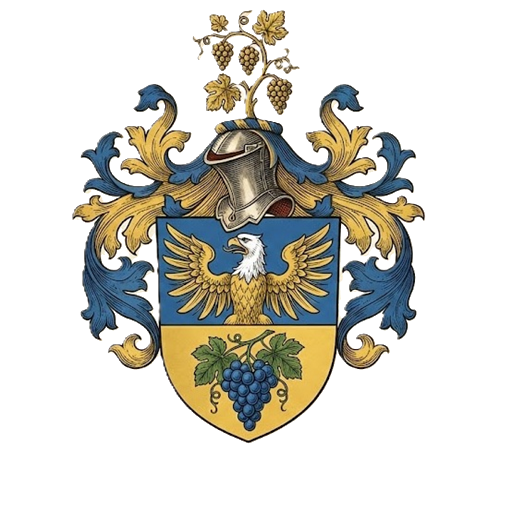
From Field to Workshop
What did our ancestors do for a living? A family’s occupations reveal more than just economic history – they illuminate social standing, educational paths, and regional characteristics across generations. For the Nisius families of the Eifel, a multifaceted picture emerges of rural working life between the 17th and 20th centuries.
Analysis of church records, civil registries, and census data reveals a clear pattern: farming and viticulture formed the economic foundation of the family for centuries. Along the Moselle and its tributary valleys, Nisius families cultivated vines on steep slate slopes – work that demanded endurance, skill, and generational knowledge. In the Eifel hinterland, agriculture dominated with grain, livestock, and forestry.
Alongside these, skilled trades appear prominently: blacksmiths, carpenters, masons, and coopers served the village community. These professions often passed from father to son, sometimes across multiple generations. The occupational entries in historical sources also reflect social mobility: from day laborer to tenant farmer, from farmhand to independent landowner.
One crucial aspect often remains invisible: women’s work. In historical documents, wives typically appear without occupational designation – as if they were not economically active. Reality looked quite different: women worked in the fields, in the vineyards, managed households and raised children, traded at markets. Their labor was indispensable, yet rarely documented.
With emigration to America in the 19th century, the occupational spectrum transformed. In Wisconsin, Nisius families found new fields of work: farmers, brewers, merchants, and later white-collar workers and professionals. The transatlantic shift in working life can be traced through family histories.
Explore the Topics
Social History of Occupations
The Occupations of the Nisius Families: A Social Portrait
What occupations did the Nisius families practice in the Eifel? This article analyzes occupational data spanning over 300 years of family history. Featuring an interactive occupational pyramid and timeline that visualize social change from the Eifel to Wisconsin.
→ Includes: Occupational Pyramid | Occupational Map | Timeline
Women’s Work in History
The Invisible Half – Women’s Work in Family History
Why are occupational entries missing for women in historical sources? This article makes visible the hidden labor of mothers, wives, and daughters – and questions how historical record-keeping systematically erased women’s work.
→ Includes: Infographic on the visibility of women’s labor
Visualizations
The following interactive graphics illustrate the family’s occupational history:
| Visualization | Description |
|---|---|
| Occupational Pyramid | Social stratification of occupations in the Eifel |
| Occupational Map | Geographic distribution: Eifel → Wisconsin |
| Women’s Visibility | Documented vs. invisible women’s labor |
Continue Reading
- The Name Nisius – Etymology and origins of the family name
- The Journey – Emigration to America
- The Nisius Chronicle – All articles on family history
This page is part of the Nisius Chronicle – a research project on the history of the Nisius family in the Eifel and America.